
Quick answer
Movies change cinema in different ways. Some introduce or popularise technology, some invent a new visual grammar, some alter how films are marketed, and others open global audiences to stories previously kept outside the mainstream. Citizen Kane, Bicycle Thieves, Pather Panchali, Rashomon, Psycho, Jaws, Star Wars, Toy Story, The Matrix, Avatar and Parasite are important because later filmmakers and audiences could not look at cinema in quite the same way.
This chronological guide does not claim that one film invented every technique associated with it. Cinema evolves through collaboration and earlier experiments. The list focuses on moments when a movie gathered ideas into a form that became unusually visible, influential or commercially decisive.
How a movie changes cinema
A film can shift the medium through form, technology, production, representation, distribution or audience behaviour. That gives us five useful questions:
- Did it change how filmmakers tell stories or arrange images and sound?
- Did it prove that a new production method could sustain a feature film?
- Did it create a business model that studios copied?
- Did it bring a national cinema or underrepresented viewpoint to wider attention?
- Can we trace its choices through later movies, television, advertising or popular culture?
The following films answer at least one of those questions with unusual force.
15 movies that changed cinema over time
1. Battleship Potemkin (1925): editing as impact
Sergei Eisenstein's silent film became a classroom example of montage: meaning and emotion created by the collision of shots rather than by recording an event from one neutral position. The Odessa Steps sequence showed how rhythm, repeated movement and sharply contrasting images could turn editing into an argument.
Filmmakers had edited dynamically before 1925, but Battleship Potemkin made montage theory impossible to ignore. Its influence survives whenever an action sequence stretches a brief moment through rapid fragments and escalating visual ideas.
2. The Jazz Singer (1927): the sound transition accelerates
The Jazz Singer was not the first motion picture with recorded sound, and much of it remains silent, but its synchronised songs and spoken passages became a commercial event. The response pushed studios and cinemas to invest more quickly in sound production and playback systems.
Its place in history also requires context: the film includes blackface performance that is offensive and inseparable from the entertainment traditions it inherited. Studying the movie means examining both a technological turning point and the prejudice embedded in popular culture of the period.
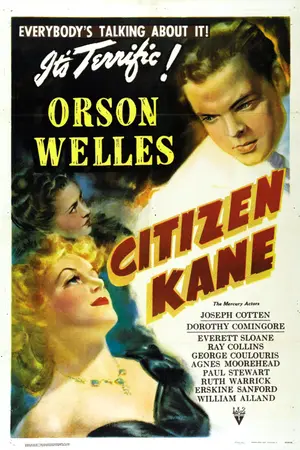
3. Citizen Kane (1941): old tools, radical combination
Citizen Kane did not invent deep focus, low angles or nonlinear storytelling. Its achievement was combining photography, production design, sound, overlapping dialogue and fractured memory with remarkable confidence. The story of Charles Foster Kane arrives through witnesses who never possess the whole person.
That combination made the movie a reference point for directors who wanted the camera and soundtrack to carry ideas, not merely record performance. The BFI's overview of Citizen Kane highlights its deep-focus photography, non-chronological structure and overlapping dialogue.
4. Bicycle Thieves (1948): reality enters the street
Bicycle Thieves follows an ordinary worker through post-war Rome with location photography, social detail and performers who do not feel separated from the city around them. Its simple search for a stolen bicycle becomes a study of work, dignity and the pressure poverty places on a family.
Italian neorealism changed what counted as cinematic drama. The BFI describes Bicycle Thieves as a key neorealist work whose non-professional actors and street-level social engagement helped shape later cinema of the real.
5. Rashomon (1950): truth depends on the teller
Rashomon presents incompatible accounts of the same event without providing the comforting certainty of one objective replay. Its structure turned unreliable perspective into the engine of the film rather than a final twist.
The idea became so culturally useful that the phrase "Rashomon effect" now describes conflicting testimony beyond cinema. The film also helped Japanese cinema reach a wider international audience after winning the Golden Lion; the BFI's Rashomon history explains that global watershed.
6. Pather Panchali (1955): Indian humanism reaches the world
Satyajit Ray's debut observes a rural Bengali family with patience, lyricism and close attention to everyday life. It rejected the idea that an internationally important Indian film had to explain India through spectacle. Specific lives, landscapes and small discoveries were enough.
Pather Panchali helped establish Ray globally and contributed to the path toward India's Parallel Cinema. The BFI notes its connection to Italian neorealism and its role in announcing a humanistic Indian art cinema.
7. Seven Samurai (1954): the modern action team
Seven Samurai gives recruitment, training, geography and group dynamics as much importance as combat. Each fighter has a distinct personality and function, while weather, movement and editing make the final action readable even when the screen is chaotic.
The gather-the-team structure became a durable model for westerns, war films, heist movies, superhero stories and direct remakes. Its lesson is not simply that action should be large; it is that an audience cares more when it understands the people and the space before conflict begins.
8. Breathless (1960): a cut can announce itself
Breathless uses jump cuts, direct address, location shooting and casual references to older movies to make filmmaking feel spontaneous and self-aware. Instead of hiding every edit, Jean-Luc Godard lets cuts interrupt movement and remind viewers that a movie is being constructed.
French New Wave energy travelled into independent cinema, music videos, advertising and any production seeking freedom from polished studio continuity. Breathless showed that limited resources could become a style rather than an apology.
9. Psycho (1960): suspense changes shape
Psycho disrupted expectations about protagonists, violence and when a story is allowed to change direction. Alfred Hitchcock also treated the release as part of the experience, using strict showtime policies to protect the film's surprises.
Its famous shower sequence demonstrates how editing, sound and suggestion can create an impact more powerful than a single explicit image. Horror and thriller filmmakers have been studying its control of audience knowledge ever since.
10. Jaws (1975): the summer blockbuster model
Jaws transformed production difficulty into elemental suspense: water, music, point of view and the partial absence of the shark made anticipation the central effect. Its enormous commercial success, wide release and television advertising helped establish the summer event movie as a studio strategy.
The blockbuster did not begin with one film, but Jaws made the model highly repeatable: a clear premise, an intense audience experience, broad promotion and a release designed to become a cultural occasion.
11. Star Wars (1977): a new industrial universe
Star Wars: Episode IV - A New Hope combined mythic adventure, used-future production design, visual effects, memorable sound and orchestral music into a world audiences wanted to revisit. Its success affected effects production, merchandising, sequel planning and the value of a coherent fictional universe.
Science fiction existed long before Star Wars, but the film demonstrated how technical craft and accessible archetypes could support a global franchise whose surrounding culture was almost as important as one release.
12. Toy Story (1995): computer animation sustains a feature
Toy Story proved that computer-generated characters could carry a complete theatrical story with humour and emotion. Its real achievement was not displaying software; it was making viewers care about Woody, Buzz and a child's changing relationship with his toys.
According to Pixar's official history, Toy Story was the world's first computer-animated feature film. Its success changed animation pipelines and encouraged an industry-wide shift toward CG features while reinforcing the principle that technology must serve character.
13. The Matrix (1999): digital action gets a new language
The Matrix blended martial arts choreography, cyberpunk ideas, virtual environments and the camera effect popularly known as bullet time. The result made digital manipulation feel like part of the story's philosophy: if reality is constructed, the image itself should be able to bend.
Action films, games and advertising copied its surfaces immediately, but the deeper influence is the integration of choreography, camera planning and post-production into one visual concept.
14. Avatar (2009): performance capture meets 3D exhibition
Avatar combined performance capture, virtual production and a stereoscopic release on a scale that encouraged cinemas to upgrade for 3D presentation. Pandora was built as an environment the camera could explore rather than as a sequence of isolated effects shots.
Not every wave of post-Avatar 3D used the format well, but the movie changed expectations about premium screens, digital characters and the relationship between live performance and virtual cinematography.
15. Parasite (2019): a language barrier becomes smaller
Parasite moves between domestic drama, social satire, suspense and tragedy without treating genre boundaries as walls. Its precise spaces make class visible: stairs, windows, basements and neighbourhoods carry the argument before characters explain it.
The film's global success culminated in the first Best Picture win for a non-English-language film, confirmed by the Academy's record. The moment did not create international cinema, but it challenged a major English-language awards institution to recognise that the centre of movie culture can move.
What changed between these milestones?
The timeline reveals a repeating cycle. A technical tool becomes important only when filmmakers connect it to emotion or meaning. Sound mattered because voices changed performance. Montage mattered because editing could create an idea. Computer animation mattered because digital characters became emotionally legible. Global recognition mattered because audiences were willing to cross language and national boundaries for a strong story.
It also shows why "first" must be used carefully. Earlier films often tested the same techniques on a smaller scale. The landmark is usually the work that makes an approach visible, persuasive or commercially repeatable enough for others to follow.
A seven-film starter course
If 15 movies feel like homework, begin with this shorter path:
- Citizen Kane for visual and narrative construction.
- Bicycle Thieves for realism and ordinary life.
- Pather Panchali for Indian humanist cinema.
- Psycho for editing and audience control.
- Star Wars for world-building and the franchise era.
- Toy Story for the digital-animation transition.
- Parasite for contemporary global cinema.
Then use the Movie X Suggestion finder to move from cinema history back to tonight's mood, or browse mind-bending movies for films that play with perception.
FAQ
Which movie changed cinema the most?
There is no objective single winner. Citizen Kane changed formal ambition, Bicycle Thieves expanded realist storytelling, Jaws influenced release strategy, Star Wars reshaped franchises, and Toy Story proved a new animation production model.
What was the first fully computer-animated feature film?
Toy Story, released in 1995, is recognised by Pixar as the world's first computer-animated feature film. Earlier films and shorts developed essential computer-animation techniques, but Toy Story sustained the method across a full theatrical feature.
Why is Pather Panchali important to cinema?
Pather Panchali brought Satyajit Ray's lyrical and naturalistic vision of rural Bengali life to international attention. It became a landmark for Indian art cinema and influenced filmmakers far beyond India.
How did Jaws change the movie business?
Its success helped establish the modern summer event release: broad promotion, a simple high-concept premise and a theatrical opening designed to become a shared cultural moment.
Did Parasite make international films popular?
International cinema had thriving audiences and major artists long before Parasite. Its historic Best Picture win mattered because it demonstrated a new level of recognition inside the Academy's most prominent category.
Where can I watch these influential movies legally?
Availability varies by country and date. Search each title through an official licensed provider in India, and verify the correct year because several films share similar titles.
Sources and further reading
Historical context was checked against the BFI film archive, Pixar's official studio history and the Academy's 2020 awards record. The analysis and selection are original to Movie X Suggestion; the list is a guided starting point rather than a claim that cinema history can be reduced to 15 titles.
Continue with the Movie X Suggestion article library or open the hidden-gem movie guide for another route through world cinema.